Gardener Croydon: Recycling and Sustainability for Garden Waste
 Gardener Croydon is committed to creating an eco-friendly waste disposal area and a thriving sustainable rubbish gardening area across the borough. Our focus is practical: reduce landfill, maximise reuse, and turn green waste into valuable resources. By designing dedicated green waste zones and supporting community reuse hubs we help gardens, allotments and public spaces become circular, productive places rather than refuse sites.
We have set a clear recycling percentage target for our operations: a baseline aim of 65% recycling and reuse of garden and household organic waste by 2028, moving incrementally to a 75% target by 2032. These targets cover composting, mulching, repair and redistribution of usable materials and the diversion of persistent organics from residual waste streams. Meeting this goal requires coordination with borough collection schemes, local transfer stations, and partner organisations that can process and redistribute recovered materials.
 The borough's approach to waste separation influences how we run our sustainable garden rubbish zones. Croydon-style separation typically encourages residents and contractors to sort food waste, garden waste, paper, glass and mixed recycling at source. We complement this by providing clear on-site segregation areas and secure containers so that green waste, woody prunings and compostable packaging are kept apart from plastics and non-compostables.
Our operational network depends on reliable local transfer stations and regional hubs. We work with local transfer stations serving the borough and nearby regional waste facilities to ensure collected material is taken to appropriate processing plants, composting facilities or anaerobic digestion units. Key logistical elements include:
- Dedicated routes to nearby transfer stations and recycling hubs
- On-site sorting bays that align with borough collection categories
- Designated areas for timber shredding, compost maturation and mulch storage
 Low-carbon vans and fleet upgrades are central to our sustainable transport plan. We operate a mix of electric vans, plug-in hybrid pickups and low-emission Euro 6 vehicles, all fitted with telematics and route optimisation software. These measures reduce emissions from garden waste removal while improving efficiency — fewer miles, lower fuel use and reduced noise in residential areas. We also prioritise smaller, frequent transfers to local transfer stations over long-haul trips to distant facilities.
Beyond logistics, we focus on practical recycling activities tailored to urban gardening and borough-level systems. Typical activities include shredding and chipping prunings to create mulch, turning food and garden waste into compost for community allotments, and segregating inert materials like metals or ceramics for recycling. We support borough separation practices by providing labelled bins and educational signage so that residents and contractors can match their waste to council categories.
 Partnerships with charities and community organisations are a cornerstone of our approach. We collaborate with local environmental charities, community gardens, food banks and practical reuse groups to redistribute usable items: tools, pots, topsoil, healthy plants and surplus compost. These partnerships extend the life of materials and channel value back to communities that need it most, while diverting large volumes from disposal streams.
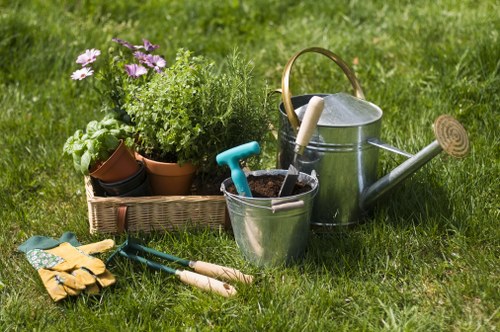 Our sustainable rubbish gardening area model emphasises onsite processing where possible. By installing small-scale composting bays, windrow areas and sheltered chipping stations, we reduce the need to transport bulky waste and increase the local circularity of materials. Compost and mulch produced on-site are used to improve soil health in public planters and community allotments, which in turn reduces the need for chemical fertilisers and increases biodiversity.
Practical services and community activities
We run a programme of activities that create measurable outcomes: phased waste separation, scheduled green rounds, and community redistribution days. Activities include organised collection windows that mirror borough collections, scheduled drop-off days for larger woody debris, and collaborative events with community groups for planting and mulching public spaces. Every initiative is designed to reduce residual waste and promote reuse.We also sponsor or assist local charities and training schemes that help unemployed residents gain skills in composting, landscaping and low-carbon logistics. These social partnerships provide both environmental and social benefits: green labour, useful training and improved neighbourhood spaces. Our work with charities ensures that usable garden equipment, plant stock and recovered soil are redistributed to community projects rather than being discarded.
Commitment, measurement and next steps
Gardener Croydon measures progress through regular audits of diversion rates, vehicle emissions monitoring and partner reporting. We track progress against our recycling percentage target and publish internal summaries that show improvements in compost yield, mulch production and the tonnes of material redirected from landfill. Our continuing investments in low-carbon vans, local transfer station routing and charity partnerships will help us achieve those targets while supporting the borough’s separation schemes.In short, our vision for an eco-friendly waste disposal area and a resilient sustainable rubbish gardening area combines practical infrastructure, low-carbon logistics, strong local partnerships and community-centred reuse. By aligning with borough waste separation approaches, optimising transfers through local stations, and working with charities to redistribute resources, Gardener Croydon creates greener, cleaner and more productive urban landscapes.